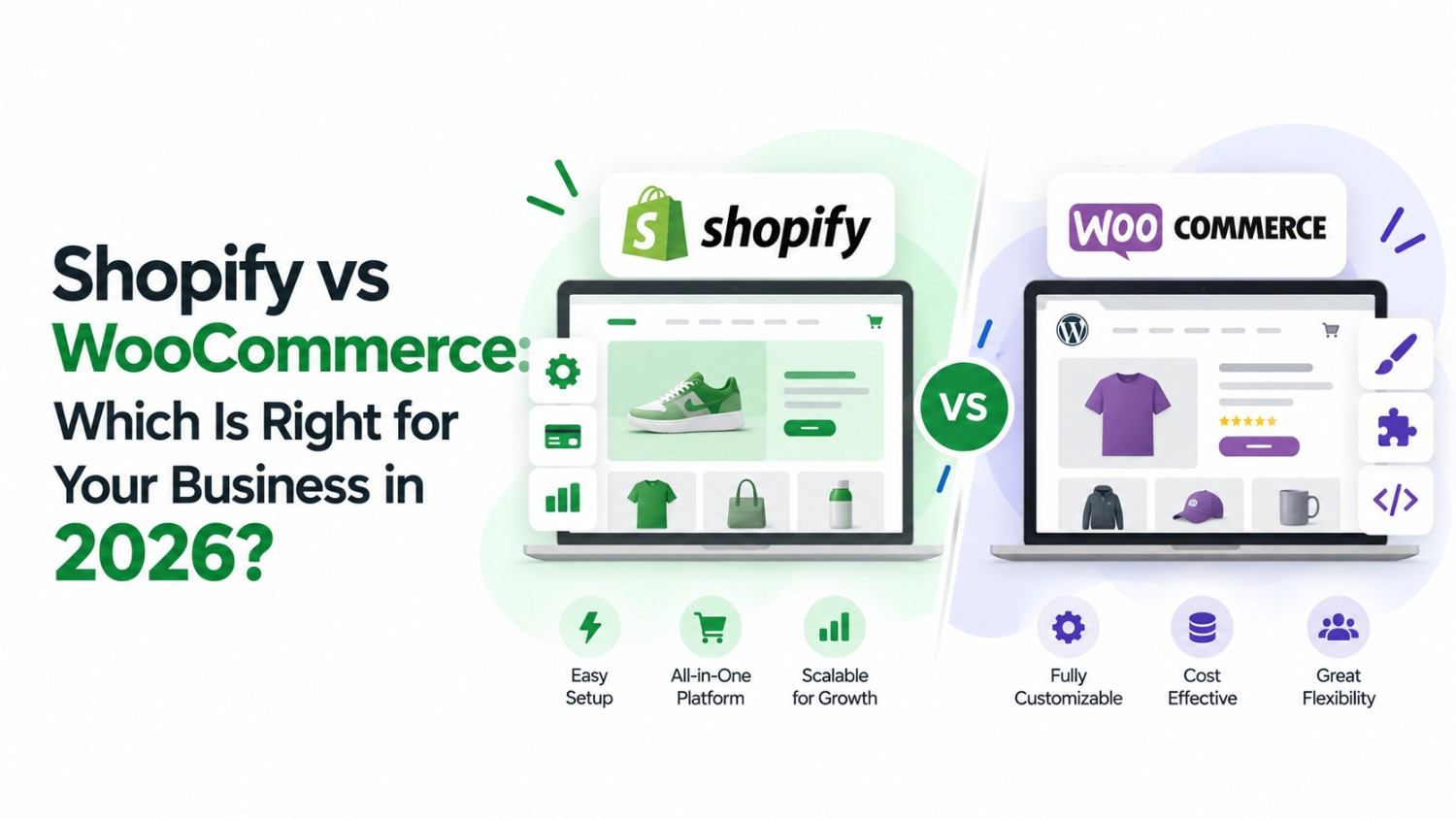
Choosing the right ecommerce platform is one of the most consequential decisions you will make for your online store. Get it right, and you have a foundation that scales with your business. Get it wrong, and you can find yourself locked into a system that slows you down or costs far more than expected.
Two platforms dominate the conversation in 2026: Shopify and WooCommerce. Both power millions of stores worldwide, but they take fundamentally different approaches to ecommerce. This guide breaks down the key differences so you can make the right call for your business.
A Quick Overview of Each Platform
Shopify is a fully hosted, all-in-one ecommerce solution. You pay a monthly subscription, and Shopify takes care of hosting, security, updates, and maintenance. Everything is managed for you - you just focus on selling.
WooCommerce is a free, open-source plugin built on top of WordPress. It gives you complete control over your store, but that freedom comes with responsibility - you manage your own hosting, security, and updates. To explore what WooCommerce can do before committing, WooCommerce.com offers comprehensive documentation and a free plugin you can install on any WordPress site.
Shopify
- Fully hosted & managed
- Monthly subscription plans
- Built-in payment gateway
- Drag-and-drop store builder
- 24/7 customer support
WooCommerce
- Self-hosted on WordPress
- Free core plugin
- Full code-level control
- Thousands of free plugins
- No platform transaction fees
Ease of Use
Shopify wins here
Shopify is designed for people who want to get a store live quickly without touching any code. Its drag-and-drop editor, guided setup, and built-in tools mean you can launch in a day. WooCommerce requires you to first set up WordPress and a hosting environment - which adds meaningful complexity for non-technical users, but offers far greater flexibility for those who know what they are doing.
Cost Comparison
WooCommerce wins here
Shopify's plans start at a fixed monthly fee and charge an additional transaction fee on every sale unless you use Shopify Payments. WooCommerce's core plugin is free - your costs go toward hosting, a domain, and any premium plugins or themes you choose. For businesses with high revenue or complex requirements, WooCommerce often works out significantly cheaper over time.
Not Sure Which Platform Is Right for You?
Our team builds and optimises stores on both Shopify and WooCommerce - we'll help you choose and build it right.
Head-to-Head Comparison
Here is how the two platforms stack up across the factors that matter most for growing ecommerce businesses:
| Factor | Shopify | WooCommerce |
|---|---|---|
| Setup difficulty | Beginner-friendly | Moderate - needs WordPress |
| Monthly cost | Fixed subscription | Pay only for hosting & add-ons |
| Customisation | Good within Shopify's system | Unlimited - full source access |
| SEO control | Good built-in tools | Excellent - deep WordPress SEO |
| Scalability | Scales easily, costs rise | Highly scalable with right host |
| Transaction fees | Yes (unless Shopify Payments) | None from platform |
SEO Capabilities
Both platforms support solid SEO, but WooCommerce - by virtue of running on WordPress - has a natural advantage. WordPress is built with content and SEO in mind, and combining WooCommerce with a plugin like Yoast SEO gives you granular control over every meta tag, schema markup, breadcrumb, and sitemap on your store. Shopify's SEO tools are capable and improving, but some structural limitations (like URL path restrictions) can hold back advanced optimisation.
Who Should Choose Which?
- Choose Shopify if you want to launch fast, prefer not to manage technical infrastructure, and are comfortable paying a predictable monthly fee for a fully managed experience.
- Choose WooCommerce if you want full ownership and flexibility, already use WordPress, care deeply about SEO, or want to avoid ongoing platform transaction fees.
- Work with a development team if you want either platform configured, customised, and optimised from day one - saving months of trial and error.
Conclusion
There is no single winner between Shopify and WooCommerce - the right choice depends entirely on your business goals, technical comfort, budget, and growth plans. Shopify offers speed and simplicity; WooCommerce offers depth and ownership. Both can power highly successful online stores when set up correctly.
If you are ready to build a store that is fast, optimised, and built for long-term growth, our team at Bamboost has hands-on experience with both platforms. We will help you choose the right fit and build it the right way - from design to launch to performance.